
Trending
This story is from January 20, 2023
A thin plastic string takes lives, killing the spirit of a festive sport
The Supreme Court and National Green Tribunal’s ban on sale, possession or use of nylon manja seems to have no effect on the ground.
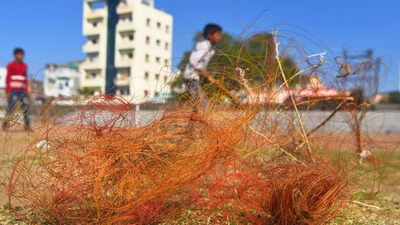
Nylon manja cuts both ways __ it’s a joy for kite flyers who praise its tenacity and unbreakable qualities. Photo: Snehil Sakhare
The Supreme Court and National Green Tribunal’s ban on sale, possession or use of nylon manja seems to have no effect on the ground.

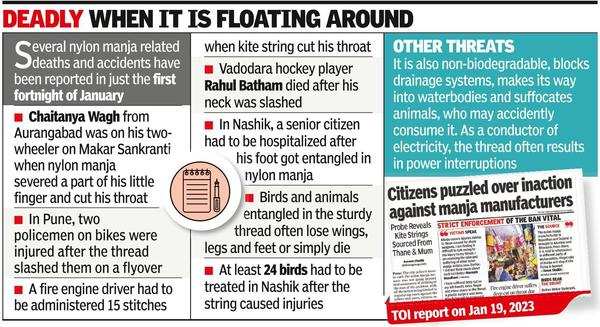
Nylon manja cuts both ways __ it’s a joy for kite flyers who praise its tenacity and unbreakable qualities.
But when floating around loosely, it becomes a killer string often slashing two-wheeler riders’ throats and other body parts deeply and causing death by bleeding.

Since December 2022, police in Nashik, Aurangabad and Pune have seized nylon manja worth lakhs of rupees. But accidents and deaths continue.
Harder Crackdown
Tareeq Adeeb, an independent lawyer who moved the Delhi high court, the apex court and the National Green Tribunal over the threat posed by nylon manja, said his clients had lost close relatives to the dangerous thread.
“When we moved the petition, the Supreme Court told us to approach the NGT. Both the NGT and the apex court orders brought a nationwide ban. When we see reports of deaths or injuries, we feel that the Centre and states have failed to act on the manufacturers. The action is limited to local sellers which serves no purpose,” he said.
He said that police action is harming the sport and hitting traditional manja makers. “We were not against kite flying. Our only contention is that nylon manja is life-threatening and state governments have failed to implement the ban,” Adeeb added.
Defying The Ban
Kite flyers quickly ditched the traditional manja made from brittle cotton when it arrived in 2008.
Made from nylon, plastic, synthetic materials and sometimes heavily coated with ground glass, the pukka or Chinese manja almost never snaps and is lethal. The technology came from China where it is used for fishing nets.
Buyers of nylon manja, fixated on its tenacity, never think about repercussions when they purchase a spool from shops surreptitiously stocking the killer thread.
“Nylon manja is difficult to break, its sturdiness makes the kite soar. Traditional manja snaps if pulled or stretched,” said a Pune customer.
Clandestine Network
Police sources told TOI that until recently, kite traders would get nylon manja from super stockists in Gujarat. Now, Delhi has become the hub and stockists supply to places all over India, they said.
A trader from Marathwada said nylon manja is durable and priced low. “A box comes in two sizes. The smaller one comprising six bundles, each 1,000m, is sold at Rs 90 by super stockists. The larger box comes with nine bundles. The wholesalers sell the small box for Rs 130, whereas the retailers sell it for Rs 200 to the customers,” a trader told TOI.
A source in Delhi said that the thread used to be imported from China but there are enough industries now around Noida, Bengaluru and in Gujarat where it is manufactured.
A trader in Aurangabad said nylon manja is way cheaper than traditional manja which is available in three varieties — 2, 4 and 6 taari.
“Taari is from the word taar which means a number of threads interwoven to make the manja. A bundle of thinnest or weakest traditional manja (2 taari) starts at Rs 200, while one bundle of six taari manja costs Rs 400,” he said.
Leaving No Trail
Super stockists sell the entire stock for cash and transport it clandestinely through goods transporters without labelling or packaging. The boxes do not have a name, address or details of the manufacturer or supplier. Adeeb said, “Earlier, it was sold under the ‘Mono Kite’ label, but manufacturers now don’t label the packets.”
End of Article
FOLLOW US ON SOCIAL MEDIA







Photostories

Hot Picks
TOP TRENDING
Popular Categories
Hot on the Web
Top Trends
Exit Poll ResultsJ&K Election Exit Poll ResultHaryana Election Exit Poll ResultTravis KelceAUS vs SL Live ScoreWomen T20 World Cup ScenarioAmethi Murder CaseIsrael Iran WarJ&K Exit PollHulk HoganUGC NET ResultDiddyWomen's T20 World CupTop MBA Colleges of IndiaT20 WC ScheduleWomen T20 World Cup Points TableLive Cricket Score
Trending Topics
Bigg Boss 18 House PhotoNavratri Colours 2024Navratri Day 2 ColourTMKOC New SonuNaga ChaitanyaDevara CollectionGOAT OTT ReleaseRajinikanthDeepika PadukoneGovindaDevaraGovinda NewsDevara Movie ReviewHealthy RaitasSwatantrya Veer SavarkarColdplay India tour 2025Maa Durga 108 NamesNavratri JewellerySony Bravia 55 inch 4k Ultra HD TVWordle Answer
Living and entertainment
Latest News
ICC Women’s T20 World Cup India schedule: Key players, where to watch, match details, and other information6,000 Dasara dolls bring underwater city of Dwarka to life in BasavanagudiBigg Boss Tamil 8: Sunitha Gogoi to dazzle with dance performance from Vijay’s film 'GOAT'IIT-JEE aspirant dies by suicide after jumping from 8th floor of high-rise in LucknowYeh Rishta Kya Kehlata Hai: Ruhi Discovers Abhira’s True Identity, Family Feud IntensifiesInd vs Ban T20I: New Gwalior stadium set to alternate hosting India matches with Indore says MPCA chiefWWE Unveils Bad Blood 2024 Opening Video Package, Featuring Triple H, Cody Rhodes, and Metro BoominNaga Chaitanya looks dashing in an ethnic outfit as he attends Navratri festivitiesHaryana assembly polls: 61 per cent voter turnout recorded till 5 pmSamantha Ruth Prabhu showers praise on Ananya Panday's 'CTRL'; calls her 'outstanding'Venus In Aries: What Does It Mean For Your RelationshipCR Park street food vendors gear up for Durga Puja rush5 Greatest matches of the “Phenomenal One” AJ Styles in WWEIDF conducts military operation against Hezbollah in southern Lebanon; destroys tunnels, eliminates terroristsAdnan Khan to romance Ayesha Singh in Mukta Dhond’s upcoming showCaroline returns to theatres for Halloween re-release in 3D, 2DSuzuki GSX-8R launched at Rs 9.25 lakh: Nearly same power as Tata Punch!Ashton Kutcher not a target in investigations involving Sean "Diddy" Combs?
Copyright © 2024 Bennett, Coleman & Co. Ltd. All rights reserved. For reprint rights: Times Syndication Service